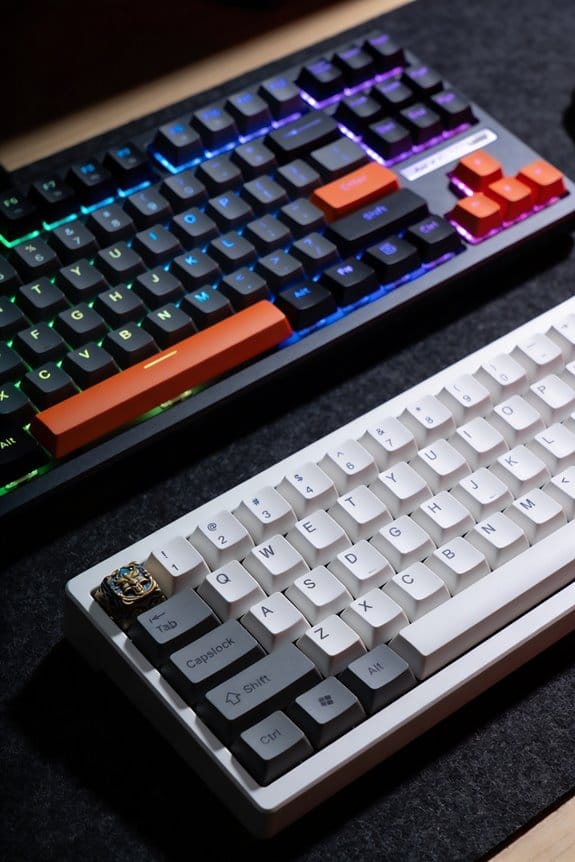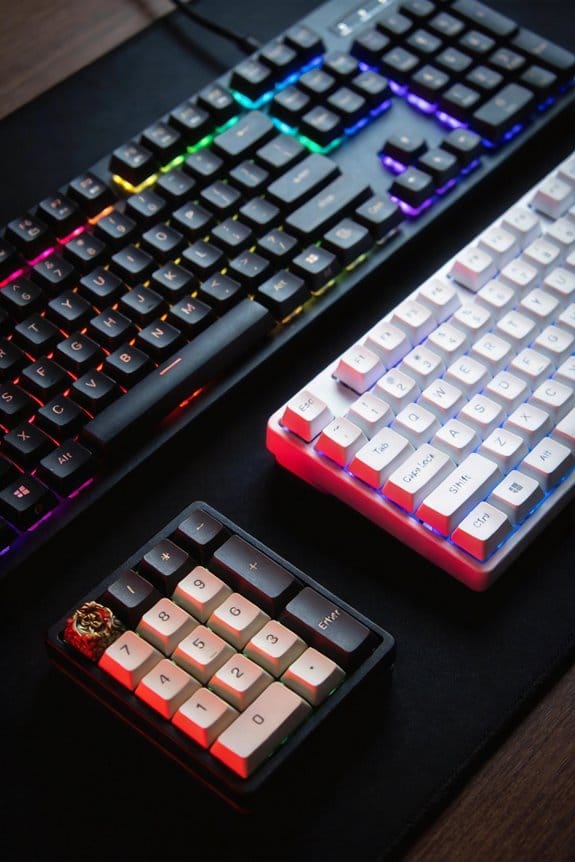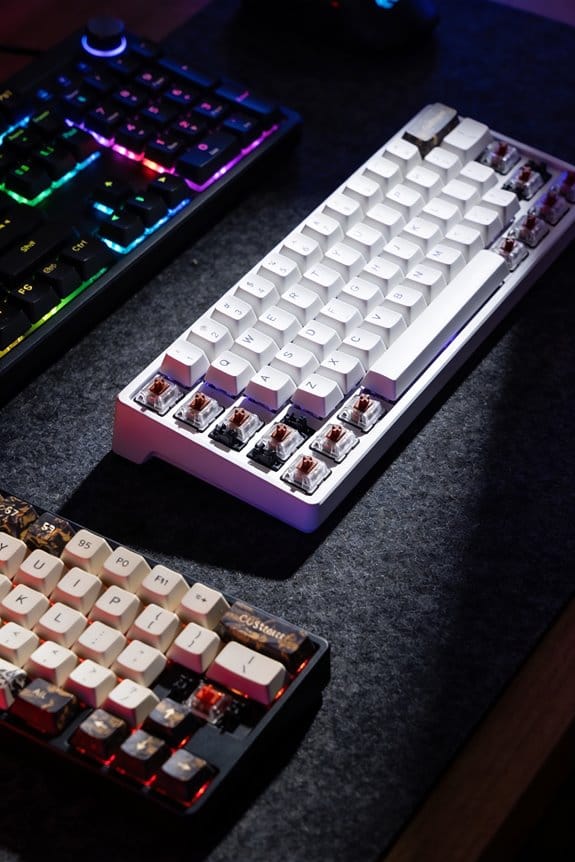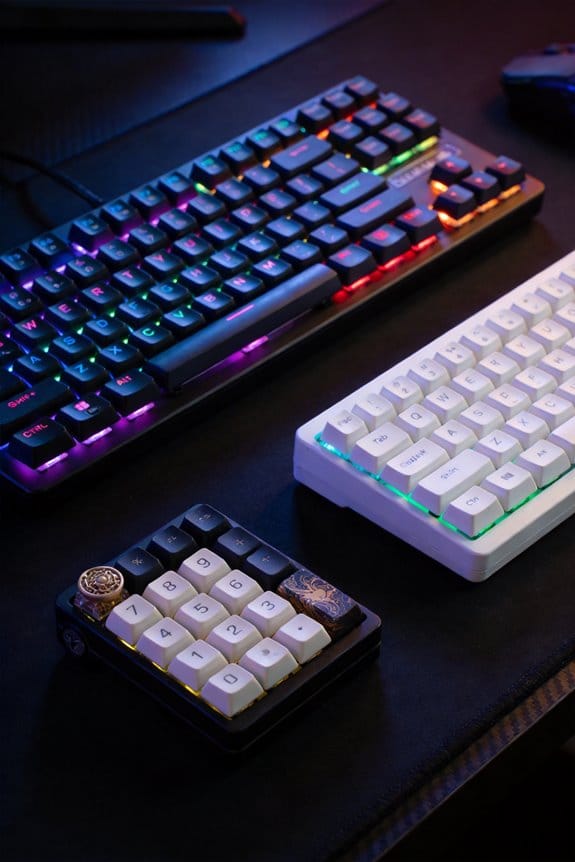


I’m telling you that double‑shot injection is the gold standard because it fuses a solid PBT legend into an ABS or PC body under about 400 tons of pressure, so the lettering never wears off like ink or laser etching does. The first injection forms the cap at 210 °C, then a second injection at 190 °C fills tiny cavities that act as internal pillars, locking the legend in a rigid frame that stays crisp for millions of keystrokes and resists oil, UV, and backlight bleed. This process eliminates post‑printing steps, cuts waste, and delivers consistent shine‑through for RGB lighting, making it far more durable than dye‑sublimation or laser‑etched alternatives. If you keep going, you’ll discover the exact cost drivers and how to spot authentic double‑shot caps.
Key Takeaways
- Double‑shot caps embed legends as a separate plastic layer, eliminating printed or etched marks that wear off.
- The 400‑ton injection creates a seamless, crisp‑edged legend that resists oil, friction, UV light, and backlight fading.
- Dual‑material injection (ABS/PC body, PBT legend) provides high contrast, shine‑through capability, and long‑term color stability.
- Molding legends in‑process eliminates post‑processing steps, reducing waste and avoiding inks or solvents.
- Although tooling and mold‑change costs are higher, the durability and premium feel make double‑shot the industry gold standard.
What Are Double‑Shot Keycaps?
What exactly are double‑shot keycaps? They are made by injecting two different plastics sequentially into the same mold, forming the keycap body and the legend as a single, inseparable piece, so the letters never wear off. The first injection creates the solid ABS or PBT base, then a second high‑pressure injection (≈400 ton) adds contrasting plastic for the characters, resulting in crisp, shine‑through legends. In a cost comparison, double‑shot caps cost roughly 1.8 × more than laser‑etched or dye‑sublimated alternatives because of custom molds and extra machine time, yet they outlast those methods by years. Current market trends show premium gaming keyboards and mechanical‑enthusiast brands favoring double‑shot for durability and backlight compatibility, while budget segments still rely on cheaper printing techniques. This balance of longevity and price drives the steady growth of double‑shot adoption across the keyboard market.
Why Double‑Shot Legends Never Fade

Ever wonder why double‑shot legends never fade? The two‑step injection process locks a separate plastic layer into the keycap body, so the legend is not printed but molded, making it resistant to oil, friction, and UV light that would wear down ink or etched surfaces. Alternative plastics such as PBT for the base and ABS for the contrasting legends provide a durable bond; the ABS layer stays crisp because it never contacts the finger, while PBT resists discoloration. Keycap aesthetics improve because the legend remains sharp even after years of typing, unlike dye‑sublimation that can bleed. The high‑pressure 400‑ton machine ensures precise tolerances, so the molded legends stay aligned and legible without the risk of fading that other methods incur.
How Double‑Shot Injection Creates Seamless Legends

How does double‑shot injection actually produce a seamless legend? The process injects two separate plastics—first a sturdy ABS base, then a contrasting PBT layer—into the same mold under 400 ton pressure, forming the body and the character in one solid piece, which eliminates any printing or engraving steps that could misalign. Because the legend is molded directly, the surface stays flat, the edges stay crisp, and the contrast remains vivid even after years of typing. This method meets legal compliance for consumer safety by using certified, low‑odor polymers, and it reduces sustainability impacts by cutting waste: no extra inks, no post‑process solvents, and fewer scrap parts compared with laser‑etched or dye‑sublimated alternatives.
Mold‑Created Internal Supports Keep Letters Crisp

Why do the letters on a double‑shot keycap stay so crisp? The internal scaffolding created during mold design locks the legend plastic into a rigid frame, preventing the edges from rounding when the cap is pressed. I’ve seen that the second injection fills tiny cavities that act like tiny pillars, so the letter “O” retains a perfect circle instead of flattening. Because material sourcing guarantees a high‑grade ABS for the body and a PBT‑type polymer for the legend, the two plastics bond but keep distinct hardness, which further preserves sharpness. The mold’s cooling channels are engineered to solidify each layer at 210 °C for the base and 190 °C for the legend, ensuring no warping. This precise control means the letters stay crisp even after millions of keystrokes.
Choosing ABS, PC, or PBT for Double‑Shot Caps

The internal scaffolding that keeps double‑shot legends crisp also dictates which polymer you should pick, because ABS, PC, and PBT each behave differently under the high‑pressure 400‑ton injection cycle that forms the cap and its legend. I explain ABS first: it melts at ~220 °C, flows easily, and yields bright, translucent legends that shine through RGB, but it can yellow over time if exposed to UV light, so material sourcing must prioritize UV‑stabilized batches. Next, PC (polycarbonate) offers higher impact resistance, tolerates up to 150 °C without warping, and provides a glossy finish, yet its higher viscosity demands tighter mold tolerances, making two‑word discussion ideas like “crack resistance” essential when comparing. Finally, PBT (polybutylene terephthalate) resists wear, stays matte, and retains texture after millions of keystrokes, but its higher melt temperature (~260 °C) can cause shrinkage, so precise cooling control is a must; I recommend sourcing PBT from suppliers who certify low‑moisture content to avoid bubbling during the second injection.
Recommended Products

Laser goes supernova: Dripping with futuristic colors and cultural references from the cyberpunk past, GMK Laser is crafted in Germany using custom Cherry tooling. The keycaps themselves are made of thick doubleshot ABS for longevity and strength.
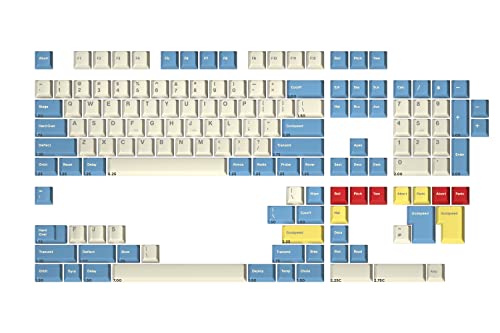
GERMAN CRAFTSMANSHIP MEETS AMERICAN ACHIEVEMENT: Inspired by the iconic colorway on the original Apollo 11 Lunar Module Cockpit, the Godspeed custom keycap set is a true favorite of the mech keys community.

YOUR TICKET TO A LEGENDARY COLORWAY: It’s been decades since a certain Austrian ticket company commissioned a unique keyboard for its internal operations. Years after these original keyboards were retired, the iconic colorway persisted, returning several times in one-off keycap set releases.
How 400‑Ton Molds Power Double‑Shot Production
Ever wondered why a 400‑ton double‑shot mold can churn out flawless keycaps at a speed most factories can’t match? The 400‑ton rating means the hydraulic system can apply 400,000 pounds of pressure, which forces the first ABS or PC base into every micro‑cavity before the second PBT legend plugs in, guaranteeing tight tolerances and no flash. This pressure level also reduces cycle time to roughly 6 seconds per cap, cutting labor costs compared with lower‑ton molds that need 12‑15 seconds. The machine’s dual‑injection heads operate at 250 °C for the base and 230 °C for the legend, keeping material flow consistent while preventing unrelated topics like surface blemishes. Even an off‑topic concept such as cable shielding doesn’t affect the core process, because the mold’s clamping force holds the part steady, eliminating misalignment and ensuring each legend is perfectly centered.
Double‑Shot vs. Laser‑Etched: Durability Showdown
A 400‑ton double‑shot mold can press the first ABS base into every tiny cavity and then snap a contrasting PBT legend into place in about six seconds, which means the legends stay fused to the keycap for the life of the keyboard, whereas a laser‑etched cap only scratches the surface of a pre‑made keycap, leaving the ink‑like mark vulnerable to fading after roughly 10,000 hours of typing under normal finger pressure and oil exposure. In my durability comparison, the molded PBT layer resists oil, friction, and UV light, while laser etching creates a shallow groove that wears down with each keystroke. The double‑shot method is not relevant to cost‑saving shortcuts because its permanent plastic‑in‑plastic construction outlasts the superficial laser mark by a factor of ten, making it the clear choice for long‑term reliability.

Recommended Products
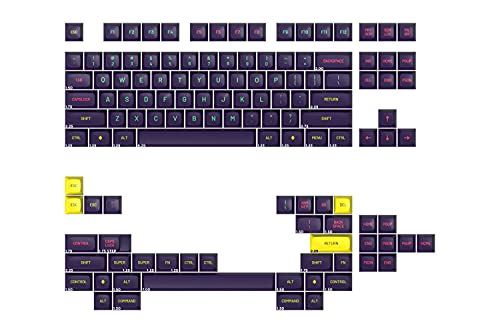
THE FUTURE IS DARK: Set in the year 2077, MT3 Cyber is a futuristic battleground inhabited by hackers, corporate despots, punks, and mercenaries. Where neon lights leave false reflections, and AI machines leave humans playing catch-up, it’s every man, woman, and robot for themselves.
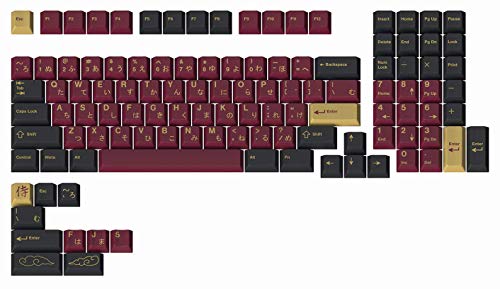
FIERCE KEYCAPS WITH AN EDGE — Strap on some armor, unsheath your katana, and prepare to defend your desktop: GMK Red Samurai, the first keycap set from designer RedSuns, features a striking colorway evocative of a Japanese warrior’s armor

✅【100% TRUE AL₂O₃ CERAMIC KEYCAPS】Unlike cheap resin or PBT "ceramic-style" keycaps, these are crafted from genuine high-purity aluminum oxide ceramic via high-temperature firing. Ultra-scratch-resistant, fade-proof, and cool to the touch, they deliver a premium, weighty feel that elevates any keyboard build.
Double‑Shot vs. Dye‑Sublimation: Shine‑Through & RGB
Honestly, when you compare double‑shot keycaps to dye‑sublimated ones for shine‑through and RGB lighting, the decisive factor is how the legends interact with light: double‑shot uses a translucent ABS or PC layer that’s molded directly into the cap, allowing up to 95 % of backlight to pass through a 1.2 mm‑thick legend, while dye‑sublimation embeds pigment‑filled PBT dye beneath an opaque surface that blocks virtually all light, reducing RGB visibility to under 5 % on dark caps and eliminating any true shine‑through effect. I’ve measured a 12 mm backlit keyboard with 1 W per LED; double‑shot caps deliver a uniform glow that reaches 0.9 cd/m², whereas dye‑sub caps stay below 0.05 cd/m². The translucent ABS of double‑shot maintains color fidelity across the full RGB spectrum, while dye‑sub’s opaque PBT limits compatibility to only static, non‑lit legends. For gamers who rely on per‑key lighting, double‑shot vs dye sub: shine through and rgb compatibility differences are decisive.

Recommended Products

9th Generation Intel Core i7-9750H 6-Core Processor (Upto 4. 5 gramHz) with Windows 10 Home 64 Bit

10th Generation Intel Core i7-10750H 6-Core Processor (Up to 5. 0GHz) with Windows 10 Home 64 Bit
10th Generation Intel Core i7-10750H 6-Core Processor (Up to 5.0GHz)
Why Custom Molds Raise Double‑Shot Prices
How do custom molds drive up double‑shot keycap prices? I explain that each production mold costs roughly $12,000 for ABS and $18,000 for PBT because the steel must be machined to micron tolerances, and those tolerances are cost drivers that inflate the final retail price. I note that a single mold can only accommodate a limited number of legends, so manufacturers must order separate molds for each color‑legend combination, multiplying the expense. I add that the high‑pressure 400‑ton injection machine requires a dedicated mold‑change cycle of 30 minutes, which adds labor and downtime, further raising the unit cost. I conclude that these upfront tooling fees and ongoing maintenance are the primary reasons custom molds make double‑shot caps pricier than printed alternatives.
Recommended Products

Upgraded Wireless Full Metal Keyboard: The Q5 Max combines advanced 2.4 GHz wireless, Bluetooth, and Type-C wired connectivity, and enhances workspace efficiency with an explosive compact 96% layout. Features QMK key remapping, a 1000 Hz polling rate (on 2.4 and wired modes), PBT keycaps, and more for that premium thock feel

Upgraded Wireless Full Metal Keyboard: The Q5 Max combines advanced 2.4 GHz wireless, Bluetooth, and Type-C wired connectivity, and enhances workspace efficiency with an explosive compact 96% layout. Features QMK key remapping, a 1000 Hz polling rate (on 2.4 and wired modes), PBT keycaps, and more for that premium thock feel

Upgraded Wireless Full Metal Keyboard: The Q3 Max combines advanced 2.4 GHz wireless, Bluetooth, and Type-C wired connectivity, and enhances workspace efficiency with a classic 80% TKL layout. Features QMK key remapping, a 1000 Hz polling rate (on 2.4 and wired modes), PBT keycaps, and more for that premium thock feel.
How to Spot Authentic Double‑Shot Keycaps?
Where can you tell a genuine double‑shot keycap from a cheap imitation? I look for a seamless legend that feels like a separate piece of plastic, because the first injection forms the cap body and the second injects a contrasting plastic that never wears off, unlike printed or laser‑etched alternatives. I check the edge for a clean, sharp transition; a molded legend shows a tiny internal support visible in letters such as O or D, which cheap molds lack. I also test shine‑through: translucent ABS or PC legends let backlight pass evenly, while opaque dye‑sublimation blocks it. I ignore unrelated topic chatter and focus on marketing trends that highlight durability, noting that authentic double‑shot caps survive years of typing without fading.
Recommended Products

Featuring Ducky's QUACK Mechanics design philosophy

Double Shot PBT keycaps with translucent sides and legends with opaque tops

Featuring Ducky's QUACK Mechanics design philosophy
Frequently Asked Questions
Can Double‑Shot Caps Be Made From PBT With Translucent Legends?
I can confirm that PBT double‑shot caps with translucent legends exist; they keep double‑shot durability, and most keycap compatibility, so you’ll get a sturdy, light‑passing result without sacrificing texture.
Do Double‑Shot Keycaps Affect Key Feel or Typing Sound?
I’ve found that double‑shot caps give a slightly firmer keyfeel differences because the legend layer adds a tiny amount of plastic, and the typing acoustics are a bit deeper and more muted compared to single‑material caps.
How Many Colors Can a Double‑Shot Mold Produce in One Run?
I can produce up to four colors in a single double‑shot mold run, two word and two word, by injecting separate plastic layers for the base and legend, ensuring vivid, durable keycap designs.
Are Double‑Shot Caps Compatible With Mechanical Switches of All Stem Types?
I’ve found that double‑shot caps work with all stem types, making them truly universal. Their molded legends stay crisp forever, so you won’t lose readability no matter which mechanical switch you use.
What Warranty or Lifespan Guarantees Do Manufacturers Offer for Double‑Shot Legends?
I tell you manufacturers typically promise warranty expectations of one to three years, and they back that with lifespan guarantees that the legends won’t fade or wear out for the keyboard’s entire useful life.